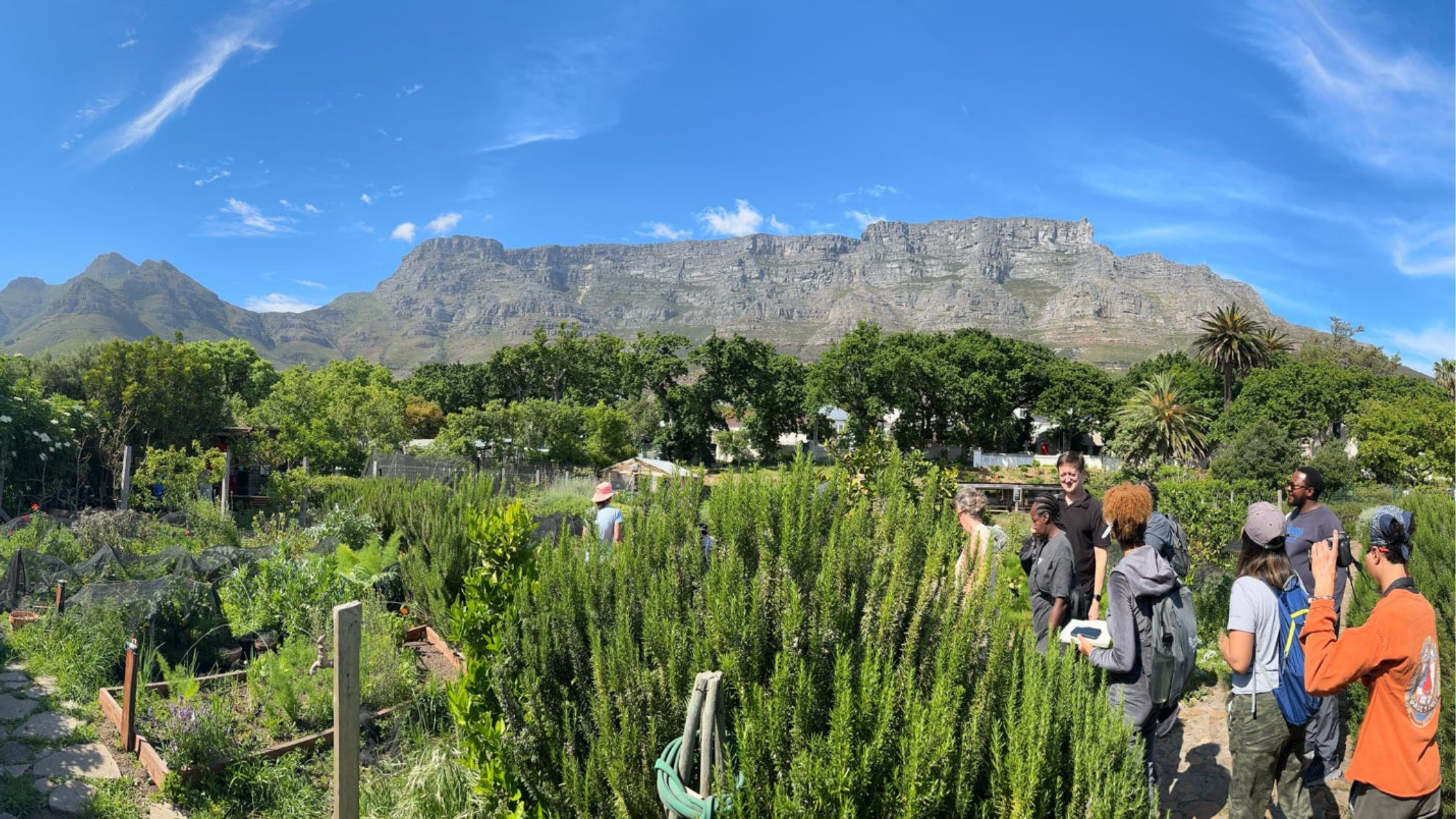
This past October, we hosted a cohort of 16 students in Cape Town from Central Piedmont Community College (CPCC) for a one-week program that innovatively connected two seemingly disparate fields: Culinary Arts and Welding. This program was a carefully created experience, designed to challenge students’ perspectives, build professional skills, and foster personal growth.
Their journey began with an essential online learning component, including lessons in isiXhosa, South African history, and sustainable practices in both their fields. This online component equipped students with basic language skills that would enable them to interact with locals more authentically, and for the students to have a deeper understanding of South Africa and its people.
Professional Skills & Local Partnership
A core element of this program was collaboration. The students split their time between two incredible local institutions
Culinary Arts students pent two days at False Bay College (FBC) Culinary campus, where they refined their skills through hands-on coffee training and a formal lunch, showcasing their techniques in a professional setting. Their culinary exploration continued with a hands-on Cape Malay Cooking Experience in the vibrant Bo Kaap and a unique Kelp Cooking Workshop with Veld & Sea.
The welding students also spent two days at FBC Westlake Campus, focused on fabrication and assembly with FBC students, directly applying their skills in a cross-cultural educational environment. This culminated in a powerful service-learning project with the Hope Africa Collective in Philippi, applying their trade skills to a community need.
Immersive Learning & Global Citizenship
The program’s most transformative moments came through intimate, challenging cultural encounters. Students gained a rare insider’s look into South Africa’s history of struggle and resilience. They took the ferry to Robben Island and returned to engage in a conversation with Dr. Lionel Davis, a former freedom fighter and political prisoner who found solace and healing through art.
In Khayelitsha, their visit with the 18 Gangster Museum was curated to focus specifically on food and welding, offering students a new perspective on how their professions can be vehicles for social upliftment and positive change. This focus on Global Citizenship was reinforced when the culinary team volunteered at Muiz Kitchen, supporting a socially responsible restaurant committed to community impact.
By linking the precision of welding with the artistry of the culinary arts through an African lens, CPCC students gained deeper self-awareness, enhanced their intercultural competence, and left with a globally relevant professional edge. They discovered that a journey to Africa is truly a journey of transformation.