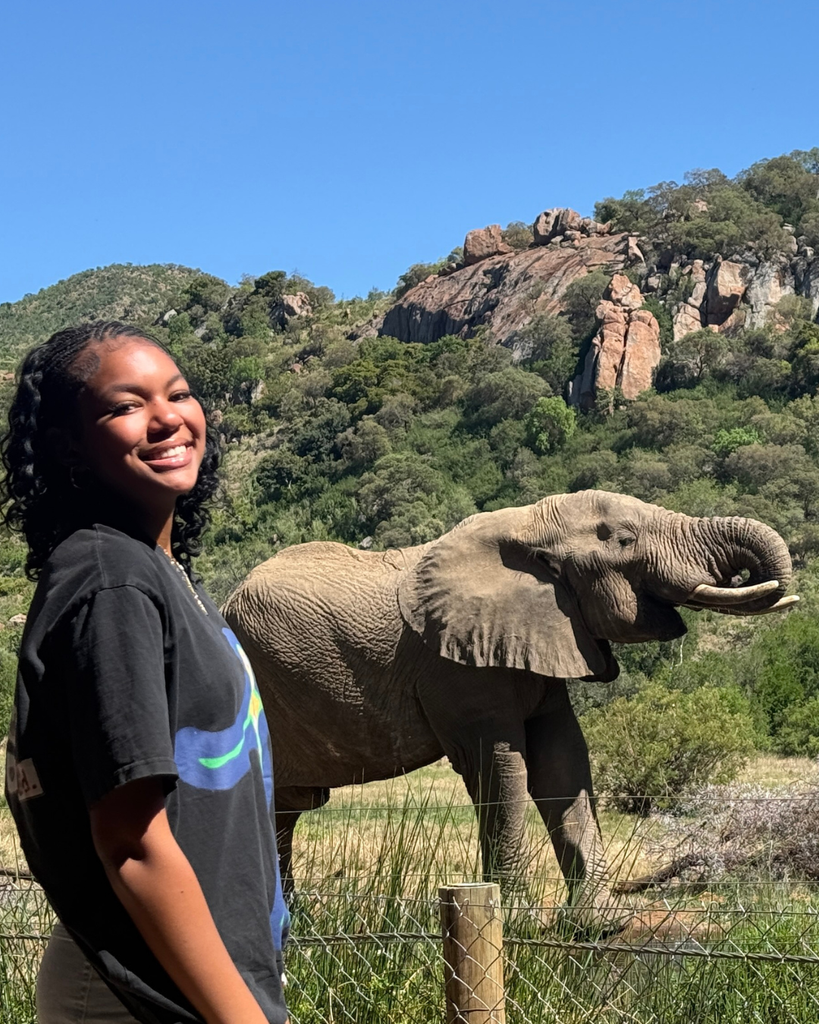
South Africa is often called the “Rainbow Nation,” a name that reflects its many people groups, cultures, and belief systems. Its landscape is just as varied, with eight different biomes spread across the country and a wide array of plant, mammal, and bird species.
In October, we hosted students from George School in South Africa for The Rainbow Lens: Art, Service, and Science. Running from October 12 to 25, 2026, the 14-day journey invited students to explore the country through the lenses of art, culture, social justice, and science, and to examine how history, creativity, and the natural environment connect.
Cape Town: History, Culture, and Creative Expression
The program began in Cape Town with an orientation and a city walk past landmarks such as St. George’s Cathedral, the Company’s Garden, and Parliament, followed by a visit to the District Six Museum. In Bo-Kaap, students explored the neighborhood on foot and joined a Cape Malay cooking class. A visit to the Robben Island Prison Museum, paired with an activity linked to United Nations Sustainable Development Goal 10 (Reduced Inequalities), allowed students to understand the country’s history of apartheid and reconciliation.
Art ran through the itinerary as a form of both expression and resistance. Students visited the Zeitz Museum of Contemporary Art Africa and had the opportunity to speak with Dr. Lionel Davis, a former political prisoner on Robben Island who found healing through art and later worked as an educational officer at the museum.
Service, Self-Awareness, and the Natural World
After a service-learning orientation at the EDU Africa hub in Cape Town, students spent a full day working alongside Kidz Africa, a local non-profit that supports at-risk youth across Southern Africa. A Cultural Self-Awareness Workshop invited them to reflect on their own perspectives, and a Sunday meeting with the Quaker community of the Western Cape offered another view into local community life.
The natural environment was part of the learning, too. Students hiked to Diaz Beach in Cape Point Nature Reserve, visited the Boulders Beach penguin colony, and rode the cableway up Table Mountain for a “Class in the Clouds.” The Western Cape leg concluded at Agulhas National Park with a visit to the Cape Agulhas Lighthouse at the Tip of Africa, team-building activities, and a classic South African braai.
Johannesburg, Pilanesberg, and Structured Reflection
In Johannesburg, students visited the Apartheid Museum, joined a cultural experience and dinner at Lesedi Cultural Village, and explored Soweto by bicycle with Book IBhoni, followed by critical discussions on what they had seen. The journey concluded in Pilanesberg National Park with game drives, final reflections, and a closing Transformation Assessment.
Programs like this one are designed in collaboration with schools so that every site visit and engagement serves specific learning goals. If you are considering a journey for your own students, you can learn more about our programs for middle and high schools, request a proposal, or read about our framework for international travel risk assessment.