In January 2026, Babson College Business students embarked on a transformative study abroad program in Cape Town, South Africa, designed to combine academic theory with hands-on learning. The program, created by EDU Africa’s Program Designer Candice Soupen and Program Coordinator Melanie Summers in collaboration with Babson faculty, offered students a unique opportunity to explore global business practices, entrepreneurship, and leadership in an incredibly dynamic and culturally rich context.
Exploring South Africa’s History and Culture
South Africa’s history is complex, spanning indigenous societies such as the Khoi and San, waves of Bantu migration, Dutch and British colonization, and the long struggle against apartheid. Today, often called the “Rainbow Nation,” South Africa is home to diverse communities, cultures, and belief systems, providing a living laboratory for students to explore how history, identity, and social dynamics shape business and society.
The program encouraged students to engage critically with these histories through site visits to significant landmarks like the District Six Museum and Robben Island. These experiences allowed students to witness how the legacies of the past influence contemporary challenges and opportunities in both civic and business life.
Hands-On Business Learning
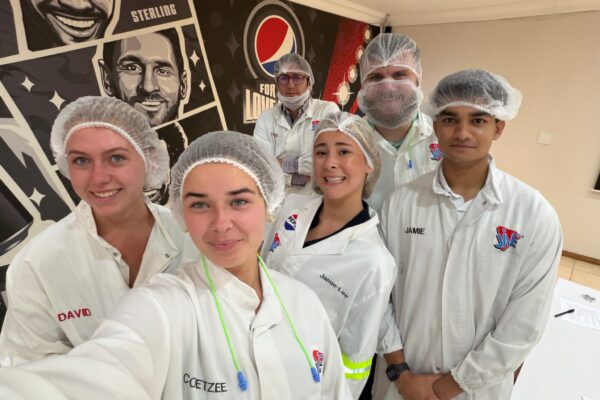
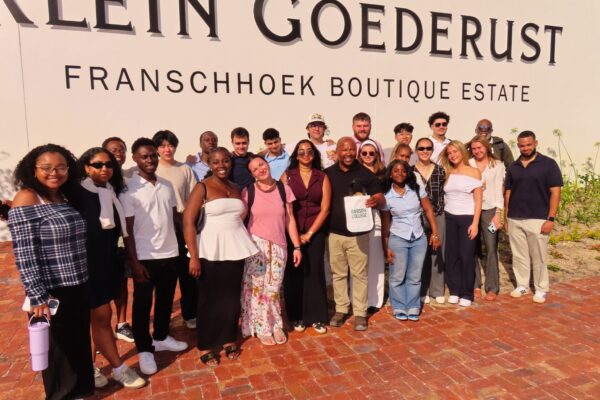
Cape Town served as a vibrant backdrop for exploring real-world business models. Students visited a range of organizations, from Capitec Bank, known for its innovative approach to financial inclusion, to Klein Goederust, South Africa’s first 100% black-owned wine farm. They also engaged with social enterprises like Khayelitsha Cookies, which empowers women through job creation, and Silulo Ulutho Technologies, which brings information and communication technology to underserved communities.
Through these visits, students examined how companies balance profitability with social responsibility, innovate in diverse markets, and integrate inclusivity into their organizational culture. Discussions with leaders and entrepreneurs provided insight into problem-solving, decision-making, and sustainable business practices in a global context.
Experiential and Reflective Learning
In addition to company visits, students participated in structured classroom sessions, reflection workshops, and cultural experiences. From cooking traditional Cape Malay dishes in Bo-Kaap to pottery-making at Macassar Pottery, students connected with local communities while developing cross-cultural communication skills and personal resilience. Excursions to Table Mountain, Cape Point, and Boulders Penguin Colony offered opportunities to reflect on environmental conservation and urban design, reinforcing lessons learned during business engagements.
Developing Global Perspectives
By the end of the program, students had not only expanded their understanding of global business but also cultivated critical skills for personal and professional growth. They explored entrepreneurship, sustainability, and social impact, while learning to navigate unfamiliar environments and engage thoughtfully with diverse perspectives. These experiences prepared students to integrate their insights into future careers and to approach challenges with creativity and empathy.
The Babson College Business Program in Cape Town exemplifies EDU Africa’s commitment to designing transformative study abroad experiences. Through a combination of academic rigor, cultural immersion, and experiential learning, students gained a holistic understanding of business in South Africa while developing the confidence, curiosity, and leadership skills that will shape their futures.